# Curso de Instrucción de Orientación y Supervivencia

CIOS

# CIOS - Material reglamentario del curso

<span style="font-size: 24pt; font-family: Rajdhani, sans-serif; font-weight: bold; font-style: normal; font-variant: normal; text-decoration: none; vertical-align: baseline; white-space: pre-wrap;">[![logotipo_6@4x.png](https://wiki.squadalpha.es/uploads/images/gallery/2024-09/scaled-1680-/logotipo-6-at-4x.png)](https://wiki.squadalpha.es/uploads/images/gallery/2024-09/logotipo-6-at-4x.png)</span>

# <span style="font-size: 24pt; font-family: Rajdhani, sans-serif; background-color: transparent; font-weight: bold; font-style: normal; font-variant: normal; text-decoration: none; vertical-align: baseline; white-space: pre-wrap;">Introducción</span>

<span style="font-size: 12pt; font-family: Rajdhani, sans-serif; background-color: transparent; font-weight: 400; font-style: normal; font-variant: normal; text-decoration: none; vertical-align: baseline; white-space: pre-wrap;">Este curso ofrece los conocimientos básicos para desenvolverse en territorio hostil, profundiza en lectura de mapas, orientación y uso de herramientas para adquirir una mayor conciencia situacional, permitiéndonos operar en cualquier terreno, de forma rápida y segura, individual o colectiva.</span>

<span style="font-size: 12pt; font-family: Rajdhani, sans-serif; background-color: transparent; font-weight: 400; font-style: normal; font-variant: normal; text-decoration: none; vertical-align: baseline; white-space: pre-wrap;"> </span>

# <span style="font-size: 24pt; font-family: Rajdhani, sans-serif; background-color: transparent; font-weight: bold; font-style: normal; font-variant: normal; text-decoration: none; vertical-align: baseline; white-space: pre-wrap;">Orientación y Navegación</span>

<span style="font-size: 12pt; font-family: Rajdhani, sans-serif; background-color: transparent; font-weight: 400; font-style: normal; font-variant: normal; text-decoration: none; vertical-align: baseline; white-space: pre-wrap;">Básicamente, orientarse es determinar en el espacio geográfico los puntos cardinales: Norte, Sur, Este y Oeste. La palabra orientación proviene de la palabra "oriente" (el punto cardinal Este, por donde sale el sol).</span>

<span style="font-size: 12pt; font-family: Rajdhani, sans-serif; background-color: transparent; font-weight: 400; font-style: normal; font-variant: normal; text-decoration: none; vertical-align: baseline; white-space: pre-wrap;">Sin embargo, estar orientado no significa que se esté localizado, pues de poco sirve conocer nuestra dirección de marcha si no sabemos a dónde nos dirigimos. </span>

<span style="font-size: 12pt; font-family: Rajdhani, sans-serif; background-color: transparent; font-weight: 400; font-style: normal; font-variant: normal; text-decoration: none; vertical-align: baseline; white-space: pre-wrap;">Para localizarse es preciso disponer de un buen conocimiento del terreno que pisamos o de un mapa detallado.</span>

<span style="font-size: 12pt; font-family: Rajdhani, sans-serif; background-color: transparent; font-weight: 400; font-style: normal; font-variant: normal; text-decoration: none; vertical-align: baseline; white-space: pre-wrap;">Resumiendo, lo que nos interesa es conocer tanto nuestra posición como la de nuestro objetivo, y el rumbo a seguir.</span>

## <span style="font-size: 22pt; font-family: Rajdhani, sans-serif; background-color: transparent; font-weight: 600; font-style: normal; font-variant: normal; text-decoration: none; vertical-align: baseline; white-space: pre-wrap;">Consideraciones para decir sí quedarse en un sitio o empezar a moverse</span>

<span style="font-size: 12pt; font-family: Rajdhani, sans-serif; background-color: transparent; font-weight: 400; font-style: normal; font-variant: normal; text-decoration: none; vertical-align: baseline; white-space: pre-wrap;">Si no estás en un entorno de combate directo, como norma general mantente en posición, salvo cuando:</span>

- <span style="font-size: 12pt; font-family: Rajdhani, sans-serif; background-color: transparent; font-weight: 400; font-style: normal; font-variant: normal; text-decoration: none; vertical-align: baseline; white-space: pre-wrap;">Lo impida una amenaza.</span>
- <span style="font-size: 12pt; font-family: Rajdhani, sans-serif; background-color: transparent; font-weight: 400; font-style: normal; font-variant: normal; text-decoration: none; vertical-align: baseline; white-space: pre-wrap;">Estés absolutamente orientado y localizado, tengas un destino conocido, y la capacidad de llegar a él.</span>
- <span style="font-size: 12pt; font-family: Rajdhani, sans-serif; background-color: transparent; font-weight: 400; font-style: normal; font-variant: normal; text-decoration: none; vertical-align: baseline; white-space: pre-wrap;">No seas capaz de conseguir agua, comida, refugio y/o ayuda.</span>
- <span style="font-size: 12pt; font-family: Rajdhani, sans-serif; background-color: transparent; font-weight: 400; font-style: normal; font-variant: normal; text-decoration: none; vertical-align: baseline; white-space: pre-wrap;">El rescate convenido no llegue.</span>

<span style="font-size: 12pt; font-family: Rajdhani, sans-serif; background-color: transparent; font-weight: 400; font-style: normal; font-variant: normal; text-decoration: none; vertical-align: baseline; white-space: pre-wrap;"> Considera lo siguiente si decides viajar:</span>

- <span style="font-size: 12pt; font-family: Rajdhani, sans-serif; background-color: transparent; font-weight: 400; font-style: normal; font-variant: normal; text-decoration: none; vertical-align: baseline; white-space: pre-wrap;">Sigue el plan de evasión trazado.</span>
- <span style="font-size: 12pt; font-family: Rajdhani, sans-serif; background-color: transparent; font-weight: 400; font-style: normal; font-variant: normal; text-decoration: none; vertical-align: baseline; white-space: pre-wrap;">Determina en qué dirección viajar y por qué.</span>
- <span style="font-size: 12pt; font-family: Rajdhani, sans-serif; background-color: transparent; font-weight: 400; font-style: normal; font-variant: normal; text-decoration: none; vertical-align: baseline; white-space: pre-wrap;">Decide qué equipo tomar, almacenar, esconder o destruir.</span>


<span style="font-size: 24pt; font-family: Rajdhani, sans-serif; background-color: transparent; font-weight: bold; font-style: normal; font-variant: normal; text-decoration: none; vertical-align: baseline; white-space: pre-wrap;">Establecer la posición y la navegación</span>

## <span style="font-size: 22pt; font-family: Rajdhani, sans-serif; background-color: transparent; font-weight: 600; font-style: normal; font-variant: normal; text-decoration: none; vertical-align: baseline; white-space: pre-wrap;">Determinar la ubicación general</span>

<span style="font-size: 12pt; font-family: Rajdhani, sans-serif; background-color: transparent; font-weight: 400; font-style: normal; font-variant: normal; text-decoration: none; vertical-align: baseline; white-space: pre-wrap;">Para ello, debemos de desarrollar un conocimiento práctico del área en la que nos encontramos, localizar puntos de referencia:</span>

- <span style="font-size: 12pt; font-family: Rajdhani, sans-serif; background-color: transparent; font-weight: bold; font-style: normal; font-variant: normal; text-decoration: none; vertical-align: baseline; white-space: pre-wrap;">Puntos de Referencia Geográficos</span><span style="font-size: 12pt; font-family: Rajdhani, sans-serif; background-color: transparent; font-weight: 400; font-style: normal; font-variant: normal; text-decoration: none; vertical-align: baseline; white-space: pre-wrap;">: Es importante observar con atención cualquier característica que destaque del terreno, como masas de agua (ríos,…) o cotas elevadas.</span>
- <span style="font-size: 12pt; font-family: Rajdhani, sans-serif; background-color: transparent; font-weight: bold; font-style: normal; font-variant: normal; text-decoration: none; vertical-align: baseline; white-space: pre-wrap;">P.R. Hechos por el hombre</span><span style="font-size: 12pt; font-family: Rajdhani, sans-serif; background-color: transparent; font-weight: 400; font-style: normal; font-variant: normal; text-decoration: none; vertical-align: baseline; white-space: pre-wrap;">: Por ejemplo, caminos o carreteras, edificaciones, líneas de alta tensión, torres de telecomunicaciones etc.</span>
- <span style="font-size: 12pt; font-family: Rajdhani, sans-serif; background-color: transparent; font-weight: 400; font-style: normal; font-variant: normal; text-decoration: none; vertical-align: baseline; white-space: pre-wrap;">Subir a un punto elevado, como la cota de una montaña, nos dará una buena visual para detectar puntos de interés.</span>
- <span style="font-size: 12pt; font-family: Rajdhani, sans-serif; background-color: transparent; font-weight: 400; font-style: normal; font-variant: normal; text-decoration: none; vertical-align: baseline; white-space: pre-wrap;">Usar el conocimiento previo del área operacional en la que nos encontremos, es decir toda la información que disponemos de la zona. ya sea:</span>
    - <span style="font-size: 12pt; font-family: Rajdhani, sans-serif; background-color: transparent; font-weight: bold; font-style: normal; font-variant: normal; text-decoration: none; vertical-align: baseline; white-space: pre-wrap;">Información cartográfica</span><span style="font-size: 12pt; font-family: Rajdhani, sans-serif; background-color: transparent; font-weight: 400; font-style: normal; font-variant: normal; text-decoration: none; vertical-align: baseline; white-space: pre-wrap;">: Visualización del mapa para determinar la posición, usando la información proporcionada en la leyenda del mapa y la búsqueda de puntos de interés.</span>
    - <span style="font-size: 12pt; font-family: Rajdhani, sans-serif; background-color: transparent; font-weight: 400; font-style: normal; font-variant: normal; text-decoration: none; vertical-align: baseline; white-space: pre-wrap;">Podemos calcular nuestra distancia del punto de origen sabiendo la velocidad a la que nos desplazamos y el tiempo de viaje: Velocidad x Tiempo = Distancia.</span>

## <span style="font-size: 22pt; font-family: Rajdhani, sans-serif; background-color: transparent; font-weight: 600; font-style: normal; font-variant: normal; text-decoration: none; vertical-align: baseline; white-space: pre-wrap;">Determinar el rumbo</span>

<span style="font-size: 12pt; font-family: Rajdhani, sans-serif; background-color: transparent; font-weight: 400; font-style: normal; font-variant: normal; text-decoration: none; vertical-align: baseline; white-space: pre-wrap;">Existen varias formas de poder situar el Norte, dependiendo de qué herramientas y conocimientos dispongamos, no todos son igual de precisos ni se podrán usar siempre:</span>

### <span style="font-size: 20pt; font-family: Rajdhani, sans-serif; background-color: transparent; font-weight: 600; font-style: normal; font-variant: normal; text-decoration: none; vertical-align: baseline; white-space: pre-wrap;">Brújula</span>

<span style="font-size: 12pt; font-family: Rajdhani, sans-serif; background-color: transparent; font-weight: 400; font-style: normal; font-variant: normal; text-decoration: none; vertical-align: baseline; white-space: pre-wrap;">La brújula es una aguja imantada que puede oscilar libremente permitiendo determinar la dirección de los Polos Magnéticos Terrestres. El objetivo final de una brújula no es señalar nuestra posición, sino indicar nuestra dirección de marcha. Es un dispositivo orientador, pero no localizador.</span>

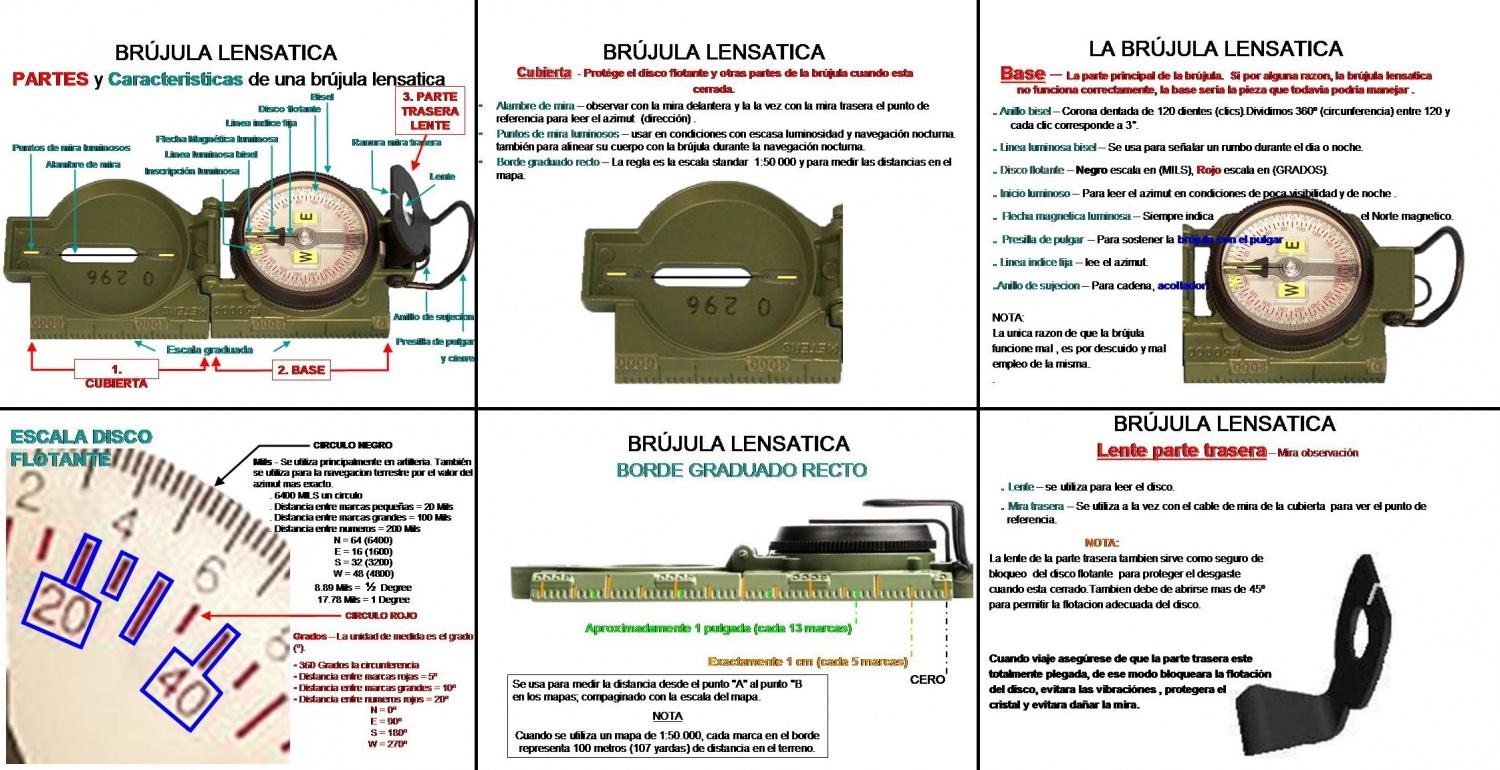
<span style="font-size: 12pt; font-family: Rajdhani, sans-serif; background-color: transparent; font-weight: 400; font-style: normal; font-variant: normal; text-decoration: none; vertical-align: baseline; white-space: pre-wrap;">Hay distintos tipos de brújulas, pero la que vamos a tratar aquí es la brújula militar o lensática. Esta brújula tiene la particularidad de disponer de unas miras y un “pelo” para alinearlas tal como haríamos en un fusil y así poder determinar el rumbo de cualquier objeto en el terreno.</span>

<span style="font-size: 12pt; font-family: Rajdhani, sans-serif; background-color: transparent; font-weight: 400; font-style: normal; font-variant: normal; text-decoration: none; vertical-align: baseline; white-space: pre-wrap;">El limbo es la esfera graduada del interior que gira libre junto a la aguja y viene dividido en 360º grados sexagesimales, además de indicar los 4 puntos cardinales cada 90º. En nuestra brújula además tenemos también otra escala donde se divide la circunferencia entre 64 partes, y que se usa para tiro balístico, y que en este caso se divide el limbo de los cañones de tiro en 6400 partes conocidas como mils. </span>

<span style="font-size: 12pt; font-family: Rajdhani, sans-serif; background-color: transparent; font-weight: 400; font-style: normal; font-variant: normal; text-decoration: none; vertical-align: baseline; white-space: pre-wrap;">[![Ios2-7.jpg](https://wiki.squadalpha.es/uploads/images/gallery/2024-10/scaled-1680-/ios2-7.jpg)](https://wiki.squadalpha.es/uploads/images/gallery/2024-10/ios2-7.jpg)</span>

<span style="font-size: 12pt; font-family: Rajdhani, sans-serif; background-color: transparent; font-weight: 400; font-style: normal; font-variant: normal; text-decoration: none; vertical-align: baseline; white-space: pre-wrap;">Para sacar la brújula estando en juego hemos de pulsar la tecla K, y si precisamos mantenerla fija pulsaremos la tecla k dos veces rápidamente. Para obtener los grados exactos colocaremos el pelo justo en el objetivo. Recordad que el pelo es el hilo que pasa por el centro de la mira que hay en la tapa.</span>

<span style="font-size: 12pt; font-family: Rajdhani, sans-serif; background-color: transparent; font-weight: 400; font-style: normal; font-variant: normal; text-decoration: none; vertical-align: baseline; white-space: pre-wrap;">Para poder seguir un rumbo exacto, no basta con estar sacando la brújula, cada dos por tres, existe el problema de desviarse un poco e ir en paralelo, lo correcto es localizar un objetivo visual en el terreno, y que tengamos visible hasta llegar a él, una vez lo hayamos rebasado, buscamos una nueva referencia y así continuamos.</span>

<span style="font-size: 12pt; font-family: Rajdhani, sans-serif; background-color: transparent; font-weight: 400; font-style: normal; font-variant: normal; text-decoration: none; vertical-align: baseline; white-space: pre-wrap;">Para volver por nuestros pasos, hay que hacer el llamado "contra rumbo" que también sirve para orientarnos en el mapa. Es sencillo, a nuestro rumbo se le suma +180º y si el resultado es mayor de 360, se le resta 360. Un ejemplo:</span>

<span style="font-size: 12pt; font-family: Rajdhani, sans-serif; background-color: transparent; font-weight: 400; font-style: normal; font-variant: normal; text-decoration: none; vertical-align: baseline; white-space: pre-wrap;">Supongamos que hemos avanzado a 330º y queremos volver, nuestro calculo seria:</span>

<span style="font-size: 12pt; font-family: Rajdhani, sans-serif; background-color: transparent; font-weight: 400; font-style: normal; font-variant: normal; text-decoration: none; vertical-align: baseline; white-space: pre-wrap;">330+180=510</span>

<span style="font-size: 12pt; font-family: Rajdhani, sans-serif; background-color: transparent; font-weight: 400; font-style: normal; font-variant: normal; text-decoration: none; vertical-align: baseline; white-space: pre-wrap;">510-360=150º</span>

<span style="font-size: 12pt; font-family: Rajdhani, sans-serif; background-color: transparent; font-weight: 400; font-style: normal; font-variant: normal; text-decoration: none; vertical-align: baseline; white-space: pre-wrap;">Otra forma de hacerlo más rápido sería sumarle +180 si el rumbo es menor de 180 o restarle 180 si el rumbo es mayor de 180, veamos el ejemplo anterior:</span>

<span style="font-size: 12pt; font-family: Rajdhani, sans-serif; background-color: transparent; font-weight: 400; font-style: normal; font-variant: normal; text-decoration: none; vertical-align: baseline; white-space: pre-wrap;">330-180=150º</span>

<span style="font-size: 12pt; font-family: Rajdhani, sans-serif; background-color: transparent; font-weight: 400; font-style: normal; font-variant: normal; text-decoration: none; vertical-align: baseline; white-space: pre-wrap;"> </span>

### <span style="font-size: 20pt; font-family: Rajdhani, sans-serif; background-color: transparent; font-weight: 600; font-style: normal; font-variant: normal; text-decoration: none; vertical-align: baseline; white-space: pre-wrap;">GPS</span>

<span style="font-size: 12pt; font-family: Rajdhani, sans-serif; background-color: transparent; font-weight: 400; font-style: normal; font-variant: normal; text-decoration: none; vertical-align: baseline; white-space: pre-wrap;">Los sistemas de posicionamiento global o G.P.S. permiten establecer con bastante precisión nuestra posición en cualquier lugar de la tierra usando para ello la señal suministrada por un conjunto de satélites que orbitan entorno a la tierra. Hay que observar que el G.P.S. da posiciones y no direcciones (como una brújula). Pero está claro que dos posiciones dan lugar a una dirección. Por ello la información que suministran los dispositivos G.P.S. es muy superior a la que puede proporcionar una brújula, ya que proporcionan la localización y orientación. </span>

<span style="font-size: 12pt; font-family: Rajdhani, sans-serif; background-color: transparent; font-weight: 400; font-style: normal; font-variant: normal; text-decoration: none; vertical-align: baseline; white-space: pre-wrap;">Entre las virtudes de los receptores G.P.S. podemos citar:</span>

- <span style="font-size: 12pt; font-family: Rajdhani, sans-serif; background-color: transparent; font-weight: 400; font-style: normal; font-variant: normal; text-decoration: none; vertical-align: baseline; white-space: pre-wrap;">Proporcionan las coordenadas de nuestra posición actual con precisión.</span>
- <span style="font-size: 12pt; font-family: Rajdhani, sans-serif; background-color: transparent; font-weight: 400; font-style: normal; font-variant: normal; text-decoration: none; vertical-align: baseline; white-space: pre-wrap;">Funcionan correctamente de día y de noche, con independencia del estado meteorológico.</span>
- <span style="font-size: 12pt; font-family: Rajdhani, sans-serif; background-color: transparent; font-weight: 400; font-style: normal; font-variant: normal; text-decoration: none; vertical-align: baseline; white-space: pre-wrap;">Permiten conocer la dirección de la marcha (como una brújula).</span>
- <span style="font-size: 12pt; font-family: Rajdhani, sans-serif; background-color: transparent; font-weight: 400; font-style: normal; font-variant: normal; text-decoration: none; vertical-align: baseline; white-space: pre-wrap;">Permiten representar gráficamente el itinerario seguido, situar puntos de paso para nuestro recorrido con anticipación (establecer way-points). </span>
- <span style="font-size: 12pt; font-family: Rajdhani, sans-serif; background-color: transparent; font-weight: 400; font-style: normal; font-variant: normal; text-decoration: none; vertical-align: baseline; white-space: pre-wrap;">Permiten desarrollar recorridos previamente programados y guardar las rutas efectuadas.</span>

<span style="font-size: 12pt; font-family: Rajdhani, sans-serif; background-color: transparent; font-weight: 400; font-style: normal; font-variant: normal; text-decoration: none; vertical-align: baseline; white-space: pre-wrap;"> En el juego disponemos de 3 GPS:</span>

- <span style="font-size: 12pt; font-family: Rajdhani, sans-serif; background-color: transparent; font-weight: 400; font-style: normal; font-variant: normal; text-decoration: none; vertical-align: baseline; white-space: pre-wrap;">GPS del Arma3 </span>
- <span style="font-size: 12pt; font-family: Rajdhani, sans-serif; background-color: transparent; font-weight: 400; font-style: normal; font-variant: normal; text-decoration: none; vertical-align: baseline; white-space: pre-wrap;">DAGR</span>
- [<span style="font-size: 12pt; font-family: Rajdhani, sans-serif; background-color: transparent; font-weight: 400; font-style: normal; font-variant: normal; text-decoration: underline; text-decoration-skip-ink: none; vertical-align: baseline; white-space: pre-wrap;">MicroDAGR</span>](https://drive.google.com/file/d/1w9qJq1vpUeTl-uRDx6M8N4xy4Mh6Sc7j/view?usp=sharing)

### <span style="font-size: 20pt; font-family: Rajdhani, sans-serif; background-color: transparent; font-weight: 600; font-style: normal; font-variant: normal; text-decoration: none; vertical-align: baseline; white-space: pre-wrap;">Otras herramientas</span>

<span style="font-size: 12pt; font-family: Rajdhani, sans-serif; background-color: transparent; font-weight: 400; font-style: normal; font-variant: normal; text-decoration: none; vertical-align: baseline; white-space: pre-wrap;">Los aparatos de telemetría láser, así como el </span>[<span style="font-size: 12pt; font-family: Rajdhani, sans-serif; background-color: transparent; font-weight: 400; font-style: normal; font-variant: normal; text-decoration: underline; text-decoration-skip-ink: none; vertical-align: baseline; white-space: pre-wrap;">Vector21</span>](https://drive.google.com/file/d/1DcxPsFrpNXKvD1WwUtNDK-UXvbUrihyx/view?usp=sharing)<span style="font-size: 12pt; font-family: Rajdhani, sans-serif; background-color: transparent; font-weight: 400; font-style: normal; font-variant: normal; text-decoration: none; vertical-align: baseline; white-space: pre-wrap;"> indican el rumbo.</span>

### <span style="font-size: 20pt; font-family: Rajdhani, sans-serif; background-color: transparent; font-weight: 600; font-style: normal; font-variant: normal; text-decoration: none; vertical-align: baseline; white-space: pre-wrap;">El Sol</span>

<span style="font-size: 12pt; font-family: Rajdhani, sans-serif; background-color: transparent; font-weight: 400; font-style: normal; font-variant: normal; text-decoration: none; vertical-align: baseline; white-space: pre-wrap;">Aunque sabemos que el Sol permanece inmóvil frente a la tierra, observamos que este se desplaza aparentemente sobre el cielo. Se suele decir que: </span><span style="font-size: 12pt; font-family: Rajdhani, sans-serif; background-color: transparent; font-weight: bold; font-style: normal; font-variant: normal; text-decoration: none; vertical-align: baseline; white-space: pre-wrap;">El Sol sale por el Este y se oculta por el Oeste</span><span style="font-size: 12pt; font-family: Rajdhani, sans-serif; background-color: transparent; font-weight: 400; font-style: normal; font-variant: normal; text-decoration: none; vertical-align: baseline; white-space: pre-wrap;"> </span>

<span style="font-size: 12pt; font-family: Rajdhani, sans-serif; background-color: transparent; font-weight: 400; font-style: normal; font-variant: normal; text-decoration: none; vertical-align: baseline; white-space: pre-wrap;">Esto sólo es cierto dos días al año, en los equinoccios, pero suele ser una aproximación muy usada en orientación. Sin embargo, más exacta es esta afirmación: </span><span style="font-size: 12pt; font-family: Rajdhani, sans-serif; background-color: transparent; font-weight: bold; font-style: normal; font-variant: normal; text-decoration: none; vertical-align: baseline; white-space: pre-wrap;">El Sol al mediodía se halla al Sur</span><span style="font-size: 12pt; font-family: Rajdhani, sans-serif; background-color: transparent; font-weight: 400; font-style: normal; font-variant: normal; text-decoration: none; vertical-align: baseline; white-space: pre-wrap;">. El mediodía es aquel momento del día en el que el sol ocupa su posición más elevada sobre el horizonte. Depende, pues, del lugar de observación, pero se toma como hora aproximada de este acontecimiento las 12:00 hora solar. En esta situación, </span><span style="font-size: 12pt; font-family: Rajdhani, sans-serif; background-color: transparent; font-weight: bold; font-style: normal; font-variant: normal; text-decoration: none; vertical-align: baseline; white-space: pre-wrap;">el sol indicará el sur y su sombra el norte</span><span style="font-size: 12pt; font-family: Rajdhani, sans-serif; background-color: transparent; font-weight: 400; font-style: normal; font-variant: normal; text-decoration: none; vertical-align: baseline; white-space: pre-wrap;">.</span>

  
<span style="font-size: 20pt; font-family: Rajdhani, sans-serif; background-color: transparent; font-weight: 600; font-style: normal; font-variant: normal; text-decoration: none; vertical-align: baseline; white-space: pre-wrap;">Las Estrellas</span>

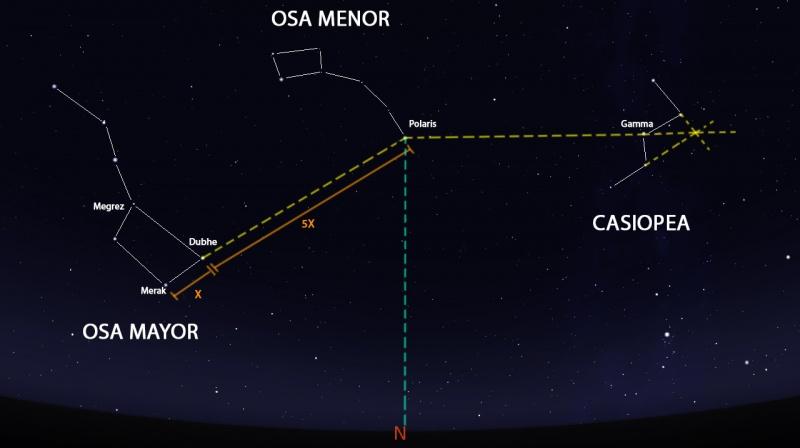
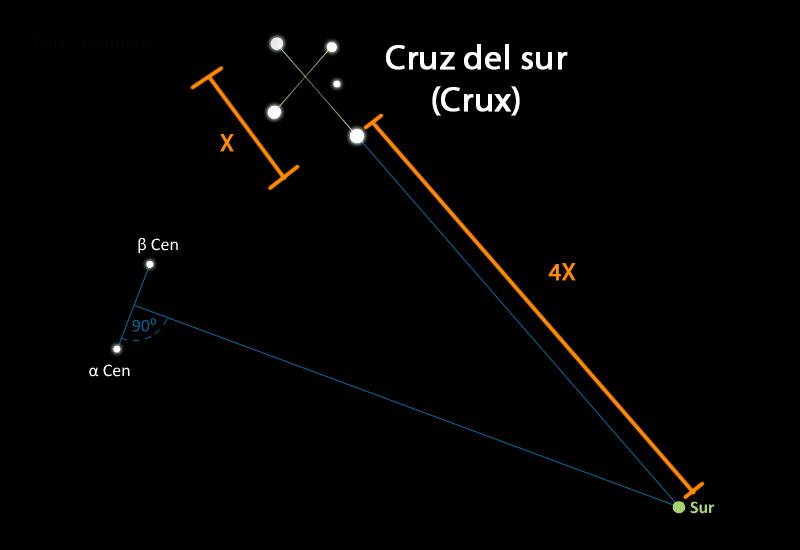
<span style="font-size: 12pt; font-family: Rajdhani, sans-serif; background-color: transparent; font-weight: 400; font-style: normal; font-variant: normal; text-decoration: none; vertical-align: baseline; white-space: pre-wrap;">Las constelaciones son conjuntos de estrellas que fueron ya descritos por los griegos a las que les dieron nombres en general relacionados con su mitología. Hay gran número de constelaciones con nombres distintos (Aries, Cáncer, Tauro, Sagitario, etc.). Sin embargo, para fines de orientación nocturna las que interesan son las denominadas constelaciones circumpolares, que así se denominan las que se sitúan en las inmediaciones de los polos (Norte o Sur).</span>

<span style="font-size: 12pt; font-family: Rajdhani, sans-serif; background-color: transparent; font-weight: 400; font-style: normal; font-variant: normal; text-decoration: none; vertical-align: baseline; white-space: pre-wrap;"> </span>

<span style="font-size: 12pt; font-family: Rajdhani, sans-serif; background-color: transparent; font-weight: 400; font-style: normal; font-variant: normal; text-decoration: none; vertical-align: baseline; white-space: pre-wrap;"> </span>[![Ios2-2.jpg](https://wiki.squadalpha.es/uploads/images/gallery/2024-10/scaled-1680-/Lr7ios2-2.jpg)](https://wiki.squadalpha.es/uploads/images/gallery/2024-10/Lr7ios2-2.jpg)

[![Ios2-3.jpg](https://wiki.squadalpha.es/uploads/images/gallery/2024-10/scaled-1680-/rxqios2-3.jpg)](https://wiki.squadalpha.es/uploads/images/gallery/2024-10/rxqios2-3.jpg)
### <span style="font-size: 20pt; font-family: Rajdhani, sans-serif; background-color: transparent; font-weight: 600; font-style: normal; font-variant: normal; text-decoration: none; vertical-align: baseline; white-space: pre-wrap;">La Luna</span>

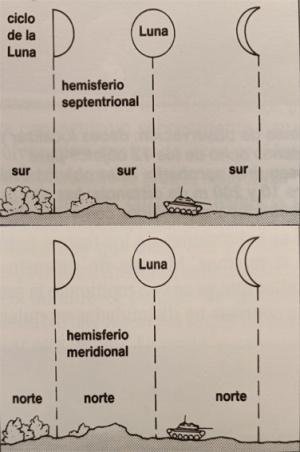
<span style="font-size: 12pt; font-family: Rajdhani, sans-serif; background-color: transparent; font-weight: 400; font-style: normal; font-variant: normal; text-decoration: none; vertical-align: baseline; white-space: pre-wrap;">La luna gira en una órbita más o menos circular a unos 400.000 Km. de nuestro planeta completando una vuelta en un período aproximado de 28 días. Durante este tiempo, el sol ilumina sus diferentes secciones. Estas diferentes iluminaciones son lo que conocemos con el nombre de fases lunares.</span>

<span style="font-size: 12pt; font-family: Rajdhani, sans-serif; background-color: transparent; font-weight: 400; font-style: normal; font-variant: normal; text-decoration: none; vertical-align: baseline; white-space: pre-wrap;"> </span>[![Luna.jpg](https://wiki.squadalpha.es/uploads/images/gallery/2024-10/scaled-1680-/88eluna.jpg)](https://wiki.squadalpha.es/uploads/images/gallery/2024-10/88eluna.jpg)


<span style="font-size: 20pt; font-family: Rajdhani, sans-serif; background-color: transparent; font-weight: 600; font-style: normal; font-variant: normal; text-decoration: none; vertical-align: baseline; white-space: pre-wrap;">Reloj</span>

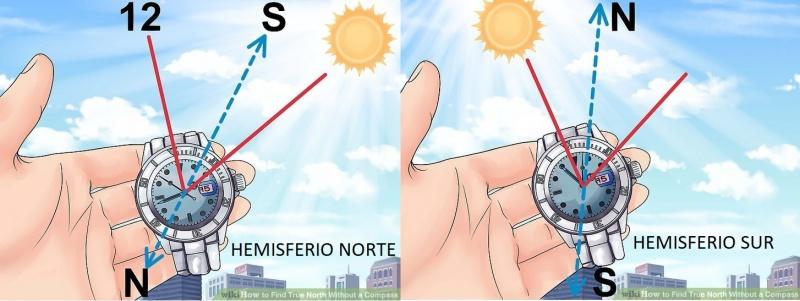
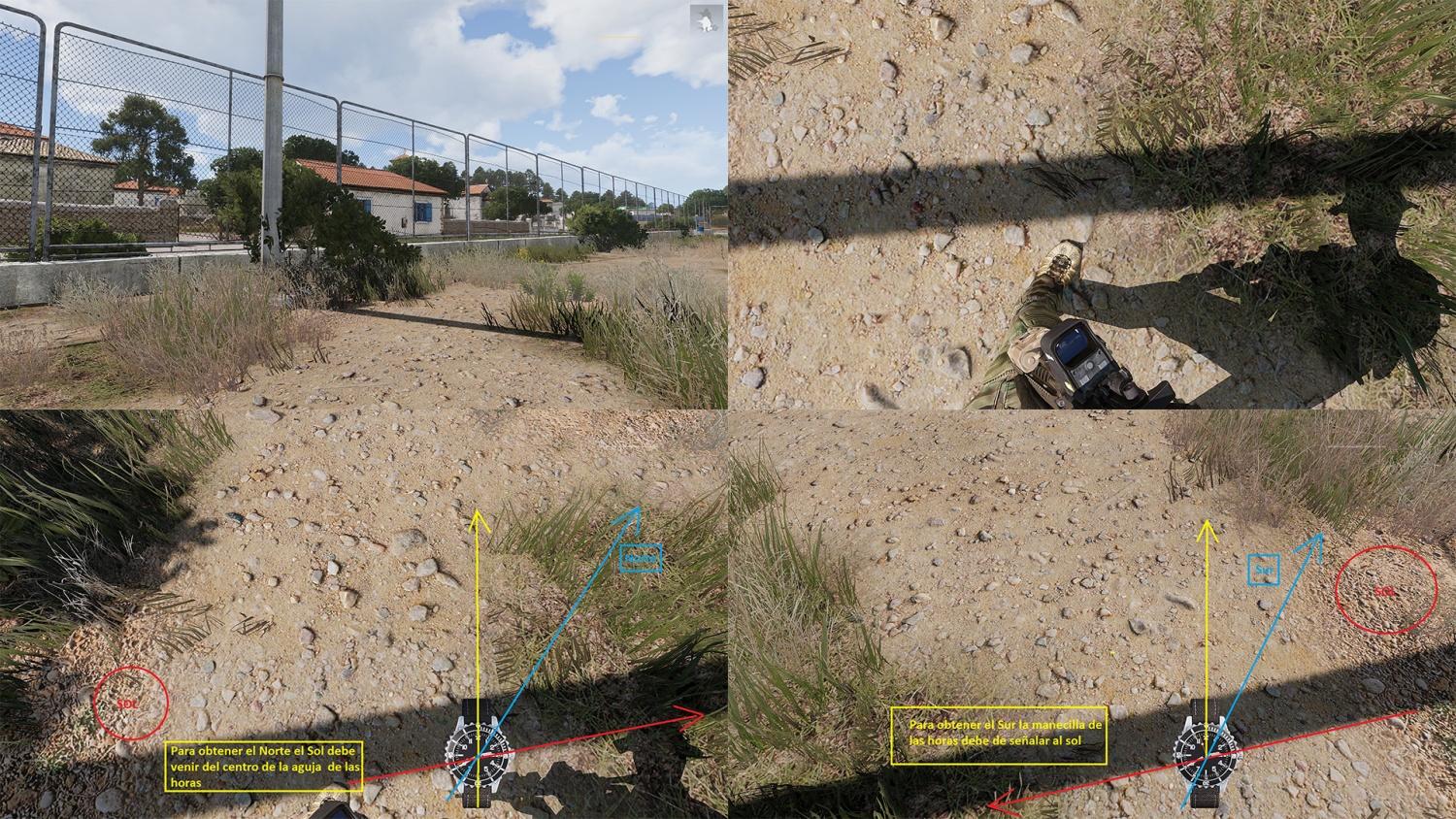
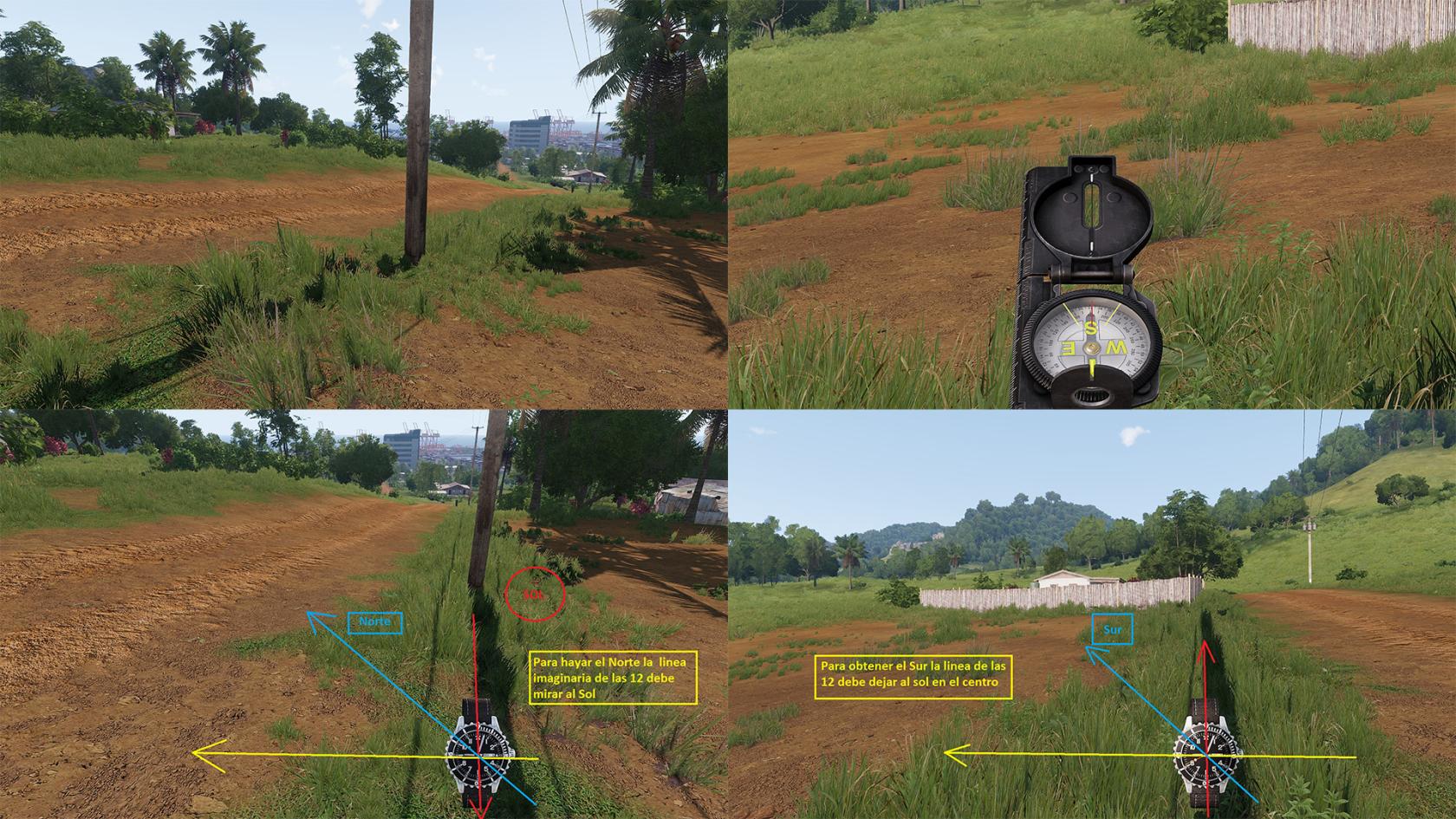
<span style="font-size: 12pt; font-family: Rajdhani, sans-serif; background-color: transparent; font-weight: 400; font-style: normal; font-variant: normal; text-decoration: none; vertical-align: baseline; white-space: pre-wrap;">El reloj permite obtener la dirección N-S con rapidez y facilidad. Además, puede aplicarse cuando el sol se halle parcialmente oculto por nubes siempre y cuando podamos determinar su posición en el cielo, aunque no proyecte sombras.</span>

<span style="font-size: 12pt; font-family: Rajdhani, sans-serif; background-color: transparent; font-weight: 400; font-style: normal; font-variant: normal; text-decoration: none; vertical-align: baseline; white-space: pre-wrap;">[![Ios2-6.jpg](https://wiki.squadalpha.es/uploads/images/gallery/2024-10/scaled-1680-/ios2-6.jpg)](https://wiki.squadalpha.es/uploads/images/gallery/2024-10/ios2-6.jpg)</span>

<span style="font-size: 12pt; font-family: Rajdhani, sans-serif; background-color: transparent; font-weight: 400; font-style: normal; font-variant: normal; text-decoration: none; vertical-align: baseline; white-space: pre-wrap;">Se ajusta el reloj a la hora solar (en el Arma 3 ya está ajustado) y se apunta su manecilla horaria hacia el sol. Entonces se toma el ángulo que forma esta manecilla con las doce y se calcula su mitad (lo que se denomina bisectriz). La bisectriz señala hacia adelante la dirección Sur y hacia atrás la dirección Norte.</span>

<span style="font-size: 12pt; font-family: Rajdhani, sans-serif; background-color: transparent; font-weight: 400; font-style: normal; font-variant: normal; text-decoration: none; vertical-align: baseline; white-space: pre-wrap;">Para poder usar esto en el arma debemos ayudarnos de una sombra de algún objeto recto (por ejemplo, una farola)</span>

<span style="font-size: 12pt; font-family: Rajdhani, sans-serif; background-color: transparent; font-weight: 400; font-style: normal; font-variant: normal; text-decoration: none; vertical-align: baseline; white-space: pre-wrap;">[![1500px-IosReloj1.jpg](https://wiki.squadalpha.es/uploads/images/gallery/2024-10/scaled-1680-/1500px-iosreloj1.jpg)](https://wiki.squadalpha.es/uploads/images/gallery/2024-10/1500px-iosreloj1.jpg)</span>

<span style="font-size: 12pt; font-family: Rajdhani, sans-serif; background-color: transparent; font-weight: 400; font-style: normal; font-variant: normal; text-decoration: none; vertical-align: baseline; white-space: pre-wrap;">Lo siguiente será colocarnos justo encima de la sombra y mirar hacia el suelo, de manera que estemos mirando casi horizontal.</span>

<span style="font-size: 12pt; font-family: Rajdhani, sans-serif; background-color: transparent; font-weight: 400; font-style: normal; font-variant: normal; text-decoration: none; vertical-align: baseline; white-space: pre-wrap;">Ahora sacamos el reloj y lo dejamos fijo pulsando dos veces rápidamente la tecla "o".</span>

<span style="font-size: 12pt; font-family: Rajdhani, sans-serif; background-color: transparent; font-weight: 400; font-style: normal; font-variant: normal; text-decoration: none; vertical-align: baseline; white-space: pre-wrap;">Acto seguido nos giraremos para hacer coincidir la manilla de la hora con la sombra. Hay dos formas si dejamos el sol en el centro de la manilla obtendremos el norte y si dejamos al sol en el número de la hora encontraremos el sur. Sabiendo esto podemos hacer el que más nos convenga según nos interese obtener el norte o el sur. El proceso es el mismo, para hacer el norte hay que trazar un ángulo entre la línea marcada de las horas y las 12 del reloj, y sacamos su bisectriz, osease la mitad del ángulo. Y ya solo nos falta alargar la línea de forma imaginaria para encontrar una referencia para tomar el rumbo.</span>

<span style="font-size: 12pt; font-family: Rajdhani, sans-serif; background-color: transparent; font-weight: 400; font-style: normal; font-variant: normal; text-decoration: none; vertical-align: baseline; white-space: pre-wrap;">En el Hemisferio sur en vez de con la aguja de las horas se hace el mismo proceso pero con la que marca las 12</span>

<span style="font-size: 12pt; font-family: Rajdhani, sans-serif; background-color: transparent; font-weight: 400; font-style: normal; font-variant: normal; text-decoration: none; vertical-align: baseline; white-space: pre-wrap;">[![reloj2.jpg](https://wiki.squadalpha.es/uploads/images/gallery/2024-10/scaled-1680-/reloj2.jpg)](https://wiki.squadalpha.es/uploads/images/gallery/2024-10/reloj2.jpg) </span>

# <span style="font-size: 24pt; font-family: Rajdhani, sans-serif; background-color: transparent; font-weight: bold; font-style: normal; font-variant: normal; text-decoration: none; vertical-align: baseline; white-space: pre-wrap;">Determinar la posición exacta en el mapa</span>

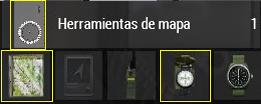
<span style="font-size: 12pt; font-family: Rajdhani, sans-serif; background-color: transparent; font-weight: 400; font-style: normal; font-variant: normal; text-decoration: none; vertical-align: baseline; white-space: pre-wrap;">Para ello necesitaremos disponer de un mapa, la brújula y las map tools.</span>

<span style="font-size: 12pt; font-family: Rajdhani, sans-serif; background-color: transparent; font-weight: 400; font-style: normal; font-variant: normal; text-decoration: none; vertical-align: baseline; white-space: pre-wrap;"> </span>[![ori1.jpg](https://wiki.squadalpha.es/uploads/images/gallery/2024-10/scaled-1680-/ori1.jpg)](https://wiki.squadalpha.es/uploads/images/gallery/2024-10/ori1.jpg)

<span style="font-size: 12pt; font-family: Rajdhani, sans-serif; background-color: transparent; font-weight: 400; font-style: normal; font-variant: normal; text-decoration: none; vertical-align: baseline; white-space: pre-wrap;">Funcionamiento Básico Map tools (Herramienta de mapa):</span>

<span style="font-size: 12pt; font-family: Rajdhani, sans-serif; background-color: transparent; font-weight: 400; font-style: normal; font-variant: normal; text-decoration: none; vertical-align: baseline; white-space: pre-wrap;">Abriremos el mapa y con el mapa abierto abriremos el menú de interacción propia (Ctrl+Winds Izq.) Se nos desplegará un menú y accederemos a las herramientas de mapa (Nos dará a elegir entre normal o pequeña, la función es la misma en las 2).</span>

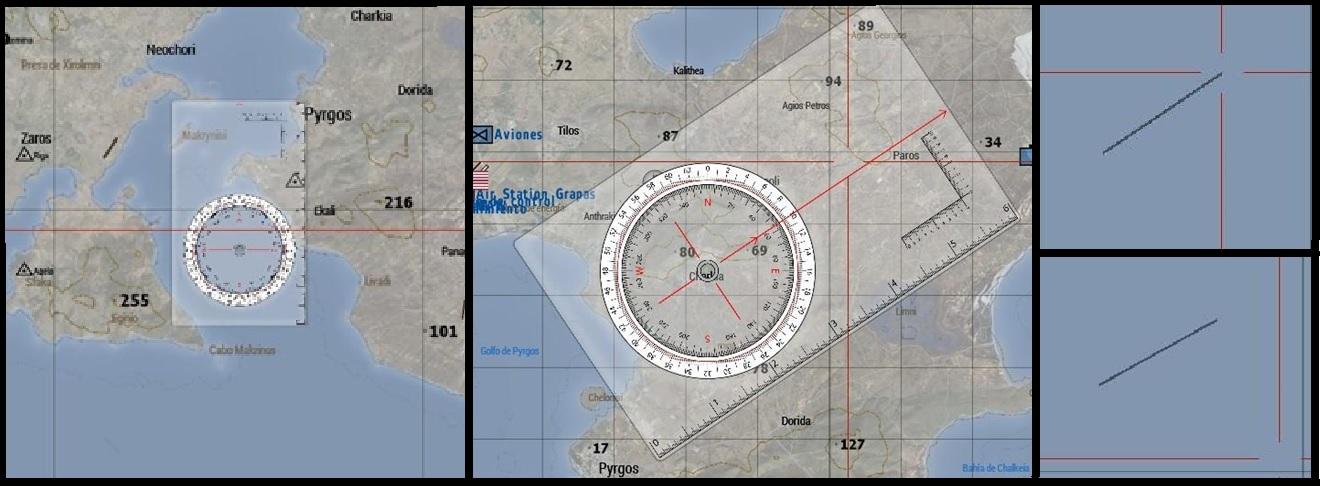
<span style="font-size: 12pt; font-family: Rajdhani, sans-serif; background-color: transparent; font-weight: 400; font-style: normal; font-variant: normal; text-decoration: none; vertical-align: baseline; white-space: pre-wrap;">Una vez hecho esto tendremos el Map tools abierto. Como se aprecia en las imágenes se trata de una regla, una L invertida con números (que sirve para dividir la cuadrícula tema ya visto en Manual Topografía y un graduador (que tendrá la misma numeración que la brújula).</span>

<span style="font-size: 12pt; font-family: Rajdhani, sans-serif; background-color: transparent; font-weight: 400; font-style: normal; font-variant: normal; text-decoration: none; vertical-align: baseline; white-space: pre-wrap;">Esta herramienta se puede girar manteniendo pulsado Alt + click derecho del ratón y desplazando el ratón de izquierda a derecha (sin soltar Ctrl + Click De.) sobre la herramienta (es decir el cursor del ratón debe estar sobre el Map tools, de lo contrario no girara, ver imagen)</span>

<span style="font-size: 12pt; font-family: Rajdhani, sans-serif; background-color: transparent; font-weight: 400; font-style: normal; font-variant: normal; text-decoration: none; vertical-align: baseline; white-space: pre-wrap;">Con el Map tools, también podremos hacer líneas en el mapa. Para ello basta con pulsar Ctrl+Click De una vez sobre el mapa. Veremos cómo se crea una línea que va del punto seleccionado al cursor del ratón. Para marcar la línea simplemente deberemos de volver a pulsar click dcho. y la línea quedará marcada en el mapa. Estas líneas solamente las veremos nosotros. Si os molestan también podréis borrarlas simplemente posando el cursor sobre la línea y presionando Supr.</span>

<span style="font-size: 12pt; font-family: Rajdhani, sans-serif; background-color: transparent; font-weight: 400; font-style: normal; font-variant: normal; text-decoration: none; vertical-align: baseline; white-space: pre-wrap;">[![Ori2.jpg](https://wiki.squadalpha.es/uploads/images/gallery/2024-10/scaled-1680-/ori2.jpg)](https://wiki.squadalpha.es/uploads/images/gallery/2024-10/ori2.jpg)</span>

## <span style="font-size: 22pt; font-family: Rajdhani, sans-serif; background-color: transparent; font-weight: 600; font-style: normal; font-variant: normal; text-decoration: none; vertical-align: baseline; white-space: pre-wrap;">Triangular posición con Map tools</span>

<span style="font-size: 12pt; font-family: Rajdhani, sans-serif; background-color: transparent; font-weight: 400; font-style: normal; font-variant: normal; text-decoration: none; vertical-align: baseline; white-space: pre-wrap;">Una vez aprendido cómo manejar el Map tools, explicaremos como triangular vuestra posición: Imaginemos que nuestra unidad ha sufrido fuego de artillería, es de noche y con la desorientación nos hemos alejado de la zona por diversas razones y actualmente nos encontramos en un bosque, sin comunicación. Solo nosotros:</span>

<span style="font-size: 12pt; font-family: Rajdhani, sans-serif; background-color: transparent; font-weight: 400; font-style: normal; font-variant: normal; text-decoration: none; vertical-align: baseline; white-space: pre-wrap;">Lo primero que debemos hacer es subir, buscar una cota, algo que nos dé una visual de la zona intentando, a ser posible, una visual de 360 grados en busca de edificaciones características, costa, iglesias, capillas, carreteras etc., algo característico que aparezca en el mapa.</span>

<span style="font-size: 12pt; font-family: Rajdhani, sans-serif; background-color: transparent; font-weight: 400; font-style: normal; font-variant: normal; text-decoration: none; vertical-align: baseline; white-space: pre-wrap;">[![1500px-Ori3.jpg](https://wiki.squadalpha.es/uploads/images/gallery/2024-10/scaled-1680-/1500px-ori3.jpg)](https://wiki.squadalpha.es/uploads/images/gallery/2024-10/1500px-ori3.jpg)</span>

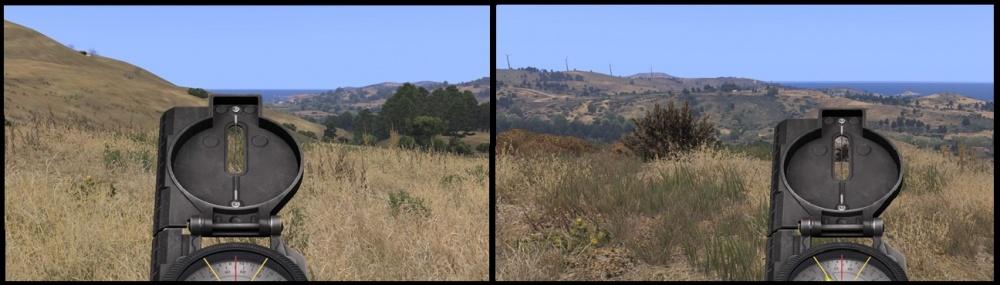
<span style="font-size: 12pt; font-family: Rajdhani, sans-serif; background-color: transparent; font-weight: 400; font-style: normal; font-variant: normal; text-decoration: none; vertical-align: baseline; white-space: pre-wrap;">Una vez en un alto, observamos si hay algo que destaque sobre el resto. En mi caso, observo que a rumbo 40 se encuentra el mar. Por rumbo 155 observó una antena repetidora de televisión bastante característica, pero la descartamos ya que en el mapa no hace referencia a esas antenas. Pero desde mi posición actual no puedo hacer una triangulación correcta ya que debería de ver la mayor costa posible. Para hacerme una idea en que parte de costa estoy, por ello sigo subiendo.</span>

<span style="font-size: 12pt; font-family: Rajdhani, sans-serif; background-color: transparent; font-weight: 400; font-style: normal; font-variant: normal; text-decoration: none; vertical-align: baseline; white-space: pre-wrap;">[![1000px-Ori4.jpg](https://wiki.squadalpha.es/uploads/images/gallery/2024-10/scaled-1680-/1000px-ori4.jpg)](https://wiki.squadalpha.es/uploads/images/gallery/2024-10/1000px-ori4.jpg)</span>

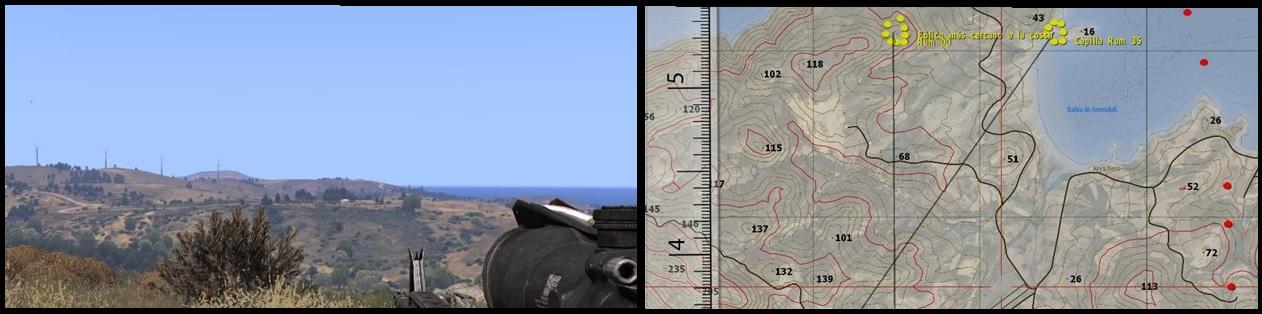
<span style="font-size: 12pt; font-family: Rajdhani, sans-serif; background-color: transparent; font-weight: 400; font-style: normal; font-variant: normal; text-decoration: none; vertical-align: baseline; white-space: pre-wrap;">Una vez nos movemos, ya por fín logro ver la costa y algo más curioso un campo eólico. Vamos a empezar a acortar zona en el mapa. Por lo que puedo quitar varias zonas como toda la costa sur.</span>

<span style="font-size: 12pt; font-family: Rajdhani, sans-serif; background-color: transparent; font-weight: 400; font-style: normal; font-variant: normal; text-decoration: none; vertical-align: baseline; white-space: pre-wrap;">También puedo suprimir toda la costa norte que de tanto al Whisky como al Echo. Por otro lado, ese campo eólico me ha hecho descartar la parte echo de la isla a falta de ellos. Por otro lado, estos campos eólicos tienen una forma característica por lo que busco en la parte norte del mapa un campo eólico grande, y una vez encontrado mi zona se ha reducido. Cabe destacar que el campo eólico parece no estar a más de 600 metros, por lo que parte del lado Echo queda descartado.</span>

<span style="font-size: 12pt; font-family: Rajdhani, sans-serif; background-color: transparent; font-weight: 400; font-style: normal; font-variant: normal; text-decoration: none; vertical-align: baseline; white-space: pre-wrap;">[![1500px-Ori5.jpg](https://wiki.squadalpha.es/uploads/images/gallery/2024-10/scaled-1680-/1500px-ori5.jpg)](https://wiki.squadalpha.es/uploads/images/gallery/2024-10/1500px-ori5.jpg)</span>

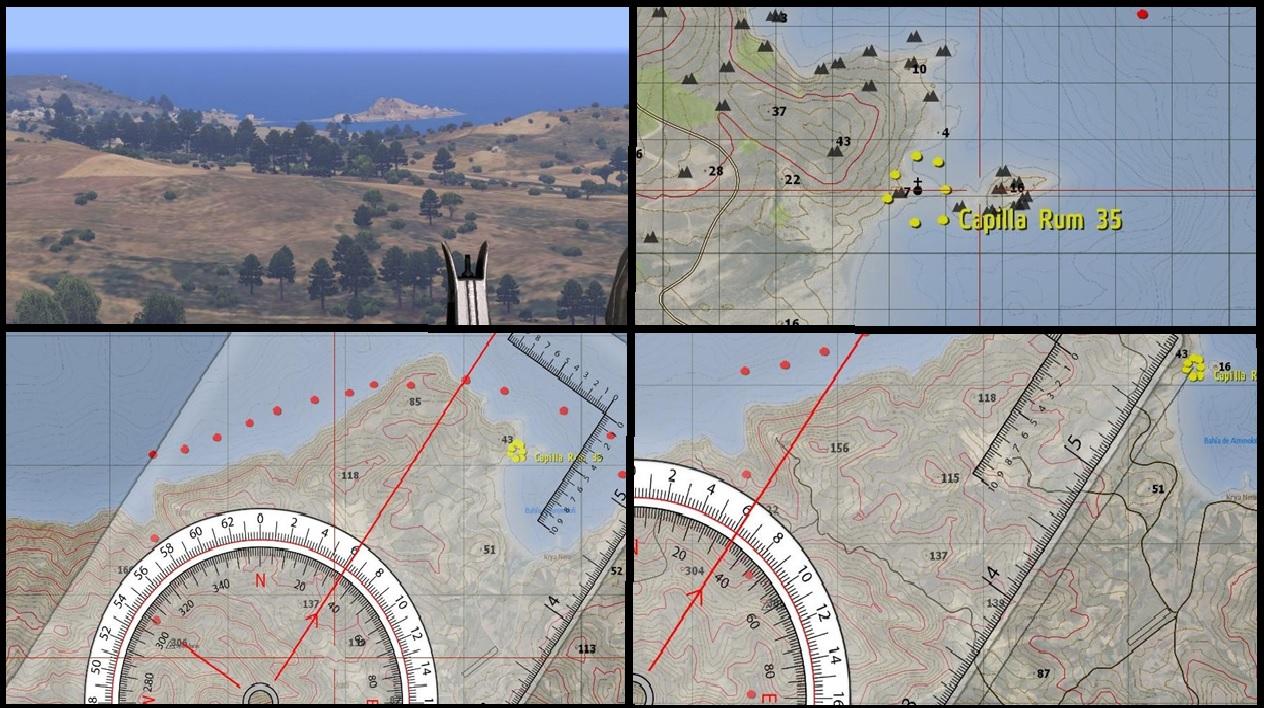
<span style="font-size: 12pt; font-family: Rajdhani, sans-serif; background-color: transparent; font-weight: 400; font-style: normal; font-variant: normal; text-decoration: none; vertical-align: baseline; white-space: pre-wrap;">Observando mi entorno veo una capilla bastante característica en una pequeña península al rumbo 35 y busco en el mapa, esa será mi primera referencia para triangular mi posición para esto, utilizare el Map tools y lo ajustare a 35 grados. Una vez hecho esto creare una línea desde la capilla y la extenderé todo lo largo que quiera.</span>

<span style="font-size: 12pt; font-family: Rajdhani, sans-serif; background-color: transparent; font-weight: 400; font-style: normal; font-variant: normal; text-decoration: none; vertical-align: baseline; white-space: pre-wrap;">[![Ori6.jpg](https://wiki.squadalpha.es/uploads/images/gallery/2024-10/scaled-1680-/ori6.jpg)](https://wiki.squadalpha.es/uploads/images/gallery/2024-10/ori6.jpg)</span>

<span style="font-size: 12pt; font-family: Rajdhani, sans-serif; background-color: transparent; font-weight: 400; font-style: normal; font-variant: normal; text-decoration: none; vertical-align: baseline; white-space: pre-wrap;">Como última referencia, y observando el mapa utilizare el eólico más cercano a la costa, actualmente en rumbo Norte puro. Al igual que con la capilla ajustare el graduador y creare una línea.</span>

<span style="font-size: 12pt; font-family: Rajdhani, sans-serif; background-color: transparent; font-weight: 400; font-style: normal; font-variant: normal; text-decoration: none; vertical-align: baseline; white-space: pre-wrap;">[![Ori7.jpg](https://wiki.squadalpha.es/uploads/images/gallery/2024-10/scaled-1680-/ori7.jpg)](https://wiki.squadalpha.es/uploads/images/gallery/2024-10/ori7.jpg)</span>

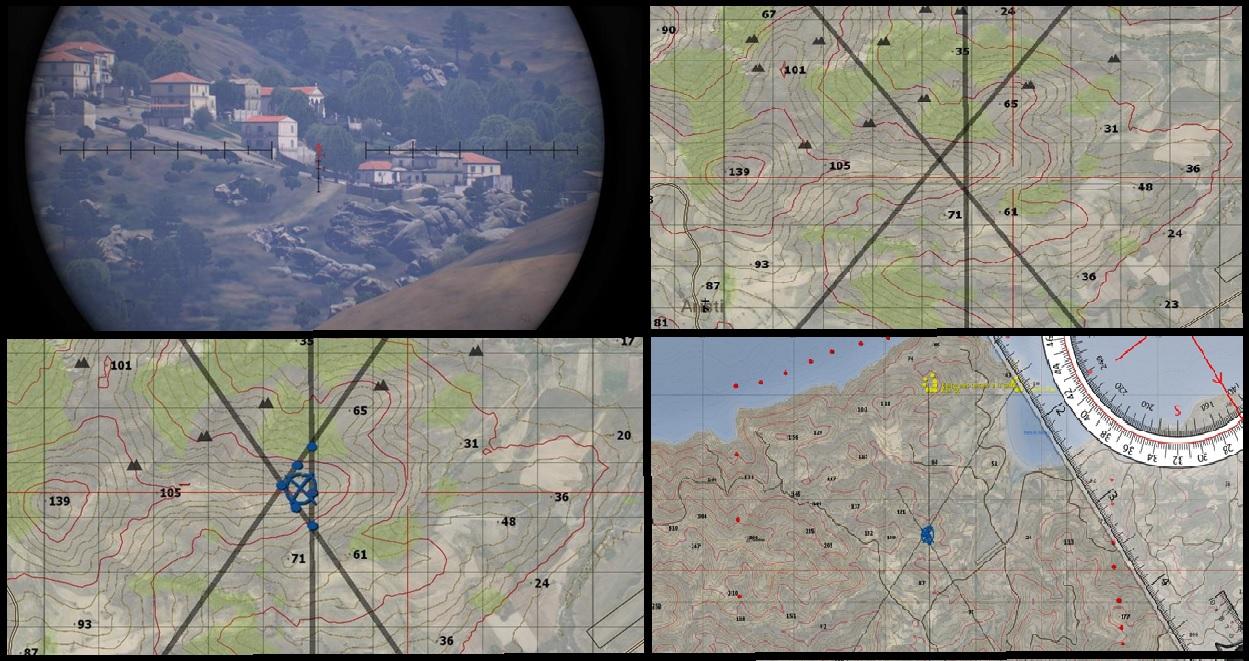
<span style="font-size: 12pt; font-family: Rajdhani, sans-serif; background-color: transparent; font-weight: 400; font-style: normal; font-variant: normal; text-decoration: none; vertical-align: baseline; white-space: pre-wrap;">Una vez hecho esto conseguiré que las dos líneas se corten entre sí, esa será mi posición más o menos, esta operación se debe repetir con otro elemento para ajustar más mi posición. Para ello observo que en 145 se encuentra una iglesia, por lo que la utilizare. Ajusto el map tools y trazo la línea. Con esta tercera línea ya puedo asegurar mi posición dentro del triángulo.</span>

<span style="font-size: 12pt; font-family: Rajdhani, sans-serif; background-color: transparent; font-weight: 400; font-style: normal; font-variant: normal; text-decoration: none; vertical-align: baseline; white-space: pre-wrap;">[![Ori8.jpg](https://wiki.squadalpha.es/uploads/images/gallery/2024-10/scaled-1680-/ori8.jpg)](https://wiki.squadalpha.es/uploads/images/gallery/2024-10/ori8.jpg)</span>

### <span style="font-size: 20pt; font-family: Rajdhani, sans-serif; background-color: transparent; font-weight: 600; font-style: normal; font-variant: normal; text-decoration: none; vertical-align: baseline; white-space: pre-wrap;">Consideraciones de viaje</span>

- <span style="font-size: 12pt; font-family: Rajdhani, sans-serif; background-color: transparent; font-weight: 400; font-style: normal; font-variant: normal; text-decoration: none; vertical-align: baseline; white-space: pre-wrap;">Elige la ruta más fácil y segura.</span>
- <span style="font-size: 12pt; font-family: Rajdhani, sans-serif; background-color: transparent; font-weight: 400; font-style: normal; font-variant: normal; text-decoration: none; vertical-align: baseline; white-space: pre-wrap;">Mantén un ritmo realista; planificar descansos y para cuando sea necesario.</span>
- <span style="font-size: 12pt; font-family: Rajdhani, sans-serif; background-color: transparent; font-weight: 400; font-style: normal; font-variant: normal; text-decoration: none; vertical-align: baseline; white-space: pre-wrap;">Evita el exceso de carga. Si puedes deshazte del equipo "inútil"</span>
- <span style="font-size: 12pt; font-family: Rajdhani, sans-serif; background-color: transparent; font-weight: 400; font-style: normal; font-variant: normal; text-decoration: none; vertical-align: baseline; white-space: pre-wrap;">Considera los requisitos de alimentos, agua y medicinas/material médico.</span>
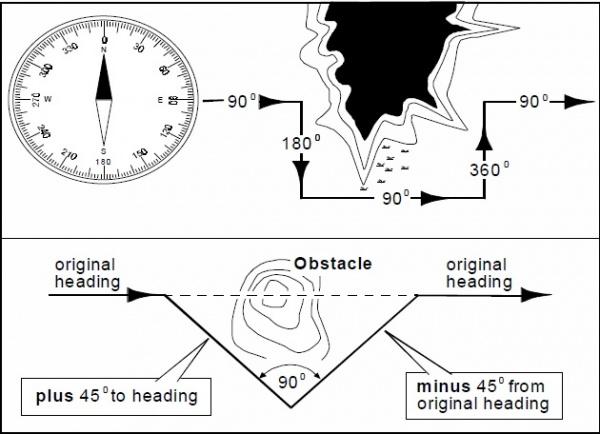
- <span style="font-size: 12pt; font-family: Rajdhani, sans-serif; background-color: transparent; font-weight: 400; font-style: normal; font-variant: normal; text-decoration: none; vertical-align: baseline; white-space: pre-wrap;">Rodea los obstáculos, no por encima ni a través de ellos.</span>
- <span style="font-size: 12pt; font-family: Rajdhani, sans-serif; background-color: transparent; font-weight: 400; font-style: normal; font-variant: normal; text-decoration: none; vertical-align: baseline; white-space: pre-wrap;">Viaja por senderos siempre que sea posible (entorno seguro).</span>
- <span style="font-size: 12pt; font-family: Rajdhani, sans-serif; background-color: transparent; font-weight: 400; font-style: normal; font-variant: normal; text-decoration: none; vertical-align: baseline; white-space: pre-wrap;">Viaja en áreas boscosas si es posible.</span>

<span style="font-size: 12pt; font-family: Rajdhani, sans-serif; background-color: transparent; font-weight: 400; font-style: normal; font-variant: normal; text-decoration: none; vertical-align: baseline; white-space: pre-wrap;"> </span>

### <span style="font-size: 20pt; font-family: Rajdhani, sans-serif; background-color: transparent; font-weight: 600; font-style: normal; font-variant: normal; text-decoration: none; vertical-align: baseline; white-space: pre-wrap;">Técnicas de selección de ruta</span>

#### <span style="font-size: 12pt; font-family: Rajdhani, sans-serif; background-color: transparent; font-weight: 400; font-style: normal; font-variant: normal; text-decoration: none; vertical-align: baseline; white-space: pre-wrap;">[![600px-Ios2-8.jpg](https://wiki.squadalpha.es/uploads/images/gallery/2024-10/scaled-1680-/600px-ios2-8.jpg)](https://wiki.squadalpha.es/uploads/images/gallery/2024-10/600px-ios2-8.jpg)</span>

#### <span style="font-size: 12pt; font-family: Rajdhani, sans-serif; background-color: transparent; font-weight: 400; font-style: normal; font-variant: normal; text-decoration: none; vertical-align: baseline; white-space: pre-wrap;">Circunnavegación:</span>

- <span style="font-size: 12pt; font-family: Rajdhani, sans-serif; background-color: transparent; font-weight: 400; font-style: normal; font-variant: normal; text-decoration: none; vertical-align: baseline; white-space: pre-wrap;">Encuentra un punto de referencia prominente en el lado opuesto del obstáculo.</span>
- <span style="font-size: 12pt; font-family: Rajdhani, sans-serif; background-color: transparent; font-weight: 400; font-style: normal; font-variant: normal; text-decoration: none; vertical-align: baseline; white-space: pre-wrap;">Rodea por el alrededor del obstáculo teniendo controlado el punto de referencia.</span>
- <span style="font-size: 12pt; font-family: Rajdhani, sans-serif; background-color: transparent; font-weight: 400; font-style: normal; font-variant: normal; text-decoration: none; vertical-align: baseline; white-space: pre-wrap;">Reanuda tu ruta de viaje.</span>

#### <span style="font-size: 12pt; font-family: Rajdhani, sans-serif; background-color: transparent; font-weight: 400; font-style: normal; font-variant: normal; text-decoration: none; vertical-align: baseline; white-space: pre-wrap;">Dogleg y desplazamiento de 90 grados</span>

<span style="font-size: 12pt; font-family: Rajdhani, sans-serif; background-color: transparent; font-weight: 400; font-style: normal; font-variant: normal; text-decoration: none; vertical-align: baseline; white-space: pre-wrap;">Avanzar en línea recta de la siguiente manera</span>

- <span style="font-size: 12pt; font-family: Rajdhani, sans-serif; background-color: transparent; font-weight: 400; font-style: normal; font-variant: normal; text-decoration: none; vertical-align: baseline; white-space: pre-wrap;">Mantén el rumbo hasta llegar al destino.</span>
- <span style="font-size: 12pt; font-family: Rajdhani, sans-serif; background-color: transparent; font-weight: 400; font-style: normal; font-variant: normal; text-decoration: none; vertical-align: baseline; white-space: pre-wrap;">Mide la distancia contando el número de pasos en un curso dado y conviértelos en unidades de mapa.</span>
    - <span style="font-size: 12pt; font-family: Rajdhani, sans-serif; background-color: transparent; font-weight: 400; font-style: normal; font-variant: normal; text-decoration: none; vertical-align: baseline; white-space: pre-wrap;">Un paso es la distancia recorrida cada vez que el mismo pie toca el suelo.</span>
    - <span style="font-size: 12pt; font-family: Rajdhani, sans-serif; background-color: transparent; font-weight: 400; font-style: normal; font-variant: normal; text-decoration: none; vertical-align: baseline; white-space: pre-wrap;">Las distancias medidas por pasos son aproximadas (ejemplo en terreno abierto, 900 pasos por kilómetro \[promedio\], o ejemplo en terreno accidentado, 1200 pasos por kilómetro \[promedio\]).</span>
- <span style="font-size: 12pt; font-family: Rajdhani, sans-serif; background-color: transparent; font-weight: 400; font-style: normal; font-variant: normal; text-decoration: none; vertical-align: baseline; white-space: pre-wrap;">Usa la cuenta de ritmo junto con la evaluación del terreno y el rumbo para determinar la ubicación. El ritmo de un individuo varía debido a factores como el terreno escarpado, el viaje de día/noche o la condición de herido/ileso.</span>

<span style="font-size: 12pt; font-family: Rajdhani, sans-serif; background-color: transparent; font-weight: 400; font-style: normal; font-variant: normal; text-decoration: none; vertical-align: baseline; white-space: pre-wrap;">Ajusta la estimación de la distancia recorrida contra estos factores para obtener una precisión relativa cuando se utiliza un recuento de ritmo.</span>

#### <span style="font-size: 12pt; font-family: Rajdhani, sans-serif; background-color: transparent; font-weight: 400; font-style: normal; font-variant: normal; text-decoration: none; vertical-align: baseline; white-space: pre-wrap;"> </span><span style="font-size: 12pt; font-family: Rajdhani, sans-serif; background-color: transparent; font-weight: bold; font-style: normal; font-variant: normal; text-decoration: none; vertical-align: baseline; white-space: pre-wrap;">Desplazamiento deliberado</span>

- <span style="font-size: 12pt; font-family: Rajdhani, sans-serif; background-color: transparent; font-weight: 400; font-style: normal; font-variant: normal; text-decoration: none; vertical-align: baseline; white-space: pre-wrap;">Se usa cuando se busca un punto en una característica lineal (P.E.: un camino o un río).</span>
- <span style="font-size: 12pt; font-family: Rajdhani, sans-serif; background-color: transparent; font-weight: 400; font-style: normal; font-variant: normal; text-decoration: none; vertical-align: baseline; white-space: pre-wrap;">Navega intencionalmente hacia la izquierda o hacia la derecha del objetivo, por lo que sabes en qué dirección girar en la función lineal.</span>
- <span style="font-size: 12pt; font-family: Rajdhani, sans-serif; background-color: transparent; font-weight: 400; font-style: normal; font-variant: normal; text-decoration: none; vertical-align: baseline; white-space: pre-wrap;">Punto a punto es lo mismo que la línea recta.</span>
    - <span style="font-size: 12pt; font-family: Rajdhani, sans-serif; background-color: transparent; font-weight: 400; font-style: normal; font-variant: normal; text-decoration: none; vertical-align: baseline; white-space: pre-wrap;">Elije puntos de referencia y recorre el camino de menor resistencia a un punto.</span>
    - <span style="font-size: 12pt; font-family: Rajdhani, sans-serif; background-color: transparent; font-weight: 400; font-style: normal; font-variant: normal; text-decoration: none; vertical-align: baseline; white-space: pre-wrap;">Al llegar a un punto, establece otro punto de referencia y continua.</span>

# <span style="font-size: 24pt; font-family: Rajdhani, sans-serif; background-color: transparent; font-weight: bold; font-style: normal; font-variant: normal; text-decoration: none; vertical-align: baseline; white-space: pre-wrap;">EVASIÓN</span>

## <span style="font-size: 22pt; font-family: Rajdhani, sans-serif; background-color: transparent; font-weight: 600; font-style: normal; font-variant: normal; text-decoration: none; vertical-align: baseline; white-space: pre-wrap;">Planificación</span>

<span style="font-size: 12pt; font-family: Rajdhani, sans-serif; background-color: transparent; font-weight: 400; font-style: normal; font-variant: normal; text-decoration: none; vertical-align: baseline; white-space: pre-wrap;">Las pautas para una evasión exitosa incluyen: el mantener la calma, ser paciente y con una actitud positiva, así como permanecer fuera de la vista. Usar los procedimientos establecidos, conservando fuerza para periodos críticos, descansa, come y bebe.</span>

<span style="font-size: 12pt; font-family: Rajdhani, sans-serif; background-color: transparent; font-weight: 400; font-style: normal; font-variant: normal; text-decoration: none; vertical-align: baseline; white-space: pre-wrap;">Nuestro objetivo, trazar un plan de evasión y seguirlo, pensar dónde ir, una zona que nos convenga, cerca de un área adecuada/designada para la recuperación.</span>

## <span style="font-size: 22pt; font-family: Rajdhani, sans-serif; background-color: transparent; font-weight: 600; font-style: normal; font-variant: normal; text-decoration: none; vertical-align: baseline; white-space: pre-wrap;">Camuflaje</span>

<span style="font-size: 12pt; font-family: Rajdhani, sans-serif; background-color: transparent; font-weight: 400; font-style: normal; font-variant: normal; text-decoration: none; vertical-align: baseline; white-space: pre-wrap;">Los principios básicos del camuflaje son, el perturbar el área lo menos posible, evitar cualquier actividad que revele nuestro movimiento al enemigo y aplicar el camuflaje personal.</span>

- <span style="font-size: 12pt; font-family: Rajdhani, sans-serif; background-color: transparent; font-weight: 400; font-style: normal; font-variant: normal; text-decoration: none; vertical-align: baseline; white-space: pre-wrap;"> Movimiento y Posición</span>
    - <span style="font-size: 12pt; font-family: Rajdhani, sans-serif; background-color: transparent; font-weight: 400; font-style: normal; font-variant: normal; text-decoration: none; vertical-align: baseline; white-space: pre-wrap;"> Evite movimientos innecesarios</span>
    - <span style="font-size: 12pt; font-family: Rajdhani, sans-serif; background-color: transparent; font-weight: 400; font-style: normal; font-variant: normal; text-decoration: none; vertical-align: baseline; white-space: pre-wrap;"> Aproveche la ocultación natural:</span>
        - <span style="font-size: 12pt; font-family: Rajdhani, sans-serif; background-color: transparent; font-weight: 400; font-style: normal; font-variant: normal; text-decoration: none; vertical-align: baseline; white-space: pre-wrap;"> Recuerde que, al usar sombras, cambian con el sol.</span>
        - <span style="font-size: 12pt; font-family: Rajdhani, sans-serif; background-color: transparent; font-weight: 400; font-style: normal; font-variant: normal; text-decoration: none; vertical-align: baseline; white-space: pre-wrap;"> Realice la observación desde una posición prona y oculta.</span>

## <span style="font-size: 22pt; font-family: Rajdhani, sans-serif; background-color: transparent; font-weight: 600; font-style: normal; font-variant: normal; text-decoration: none; vertical-align: baseline; white-space: pre-wrap;">Movimiento</span>

<span style="font-size: 12pt; font-family: Rajdhani, sans-serif; background-color: transparent; font-weight: 400; font-style: normal; font-variant: normal; text-decoration: none; vertical-align: baseline; white-space: pre-wrap;">Reglas básicas:</span>

<span style="font-size: 12pt; font-family: Rajdhani, sans-serif; background-color: transparent; font-weight: 400; font-style: normal; font-variant: normal; text-decoration: none; vertical-align: baseline; white-space: pre-wrap;">1º - Los grupos numerosos son fácilmente detectables. Si sois muchos, dividiros en equipos pequeños</span>

<span style="font-size: 12pt; font-family: Rajdhani, sans-serif; background-color: transparent; font-weight: 400; font-style: normal; font-variant: normal; text-decoration: none; vertical-align: baseline; white-space: pre-wrap;">2º - Si has aterrizado en paracaídas, el enemigo puede haber observado tu caída. Aléjate del área inmediata tan rápido como puedas</span>

<span style="font-size: 12pt; font-family: Rajdhani, sans-serif; background-color: transparent; font-weight: 400; font-style: normal; font-variant: normal; text-decoration: none; vertical-align: baseline; white-space: pre-wrap;">3º - Observa las reglas básicas del camuflaje, la ocultación y el movimiento</span>

<span style="font-size: 12pt; font-family: Rajdhani, sans-serif; background-color: transparent; font-weight: 400; font-style: normal; font-variant: normal; text-decoration: none; vertical-align: baseline; white-space: pre-wrap;">4º - Al marchar tomate tu tiempo: correr es cansado y te impide estar alerta</span>

<span style="font-size: 12pt; font-family: Rajdhani, sans-serif; background-color: transparent; font-weight: 400; font-style: normal; font-variant: normal; text-decoration: none; vertical-align: baseline; white-space: pre-wrap;">[![ios1-2.jpg](https://wiki.squadalpha.es/uploads/images/gallery/2024-10/scaled-1680-/ios1-2.jpg)](https://wiki.squadalpha.es/uploads/images/gallery/2024-10/ios1-2.jpg)</span>

<span style="font-size: 12pt; font-family: Rajdhani, sans-serif; background-color: transparent; font-weight: 400; font-style: normal; font-variant: normal; text-decoration: none; vertical-align: baseline; white-space: pre-wrap;">Un objeto en movimiento es fácil de detectar por lo tanto evítalo todo lo posible, si es necesario entonces:</span>

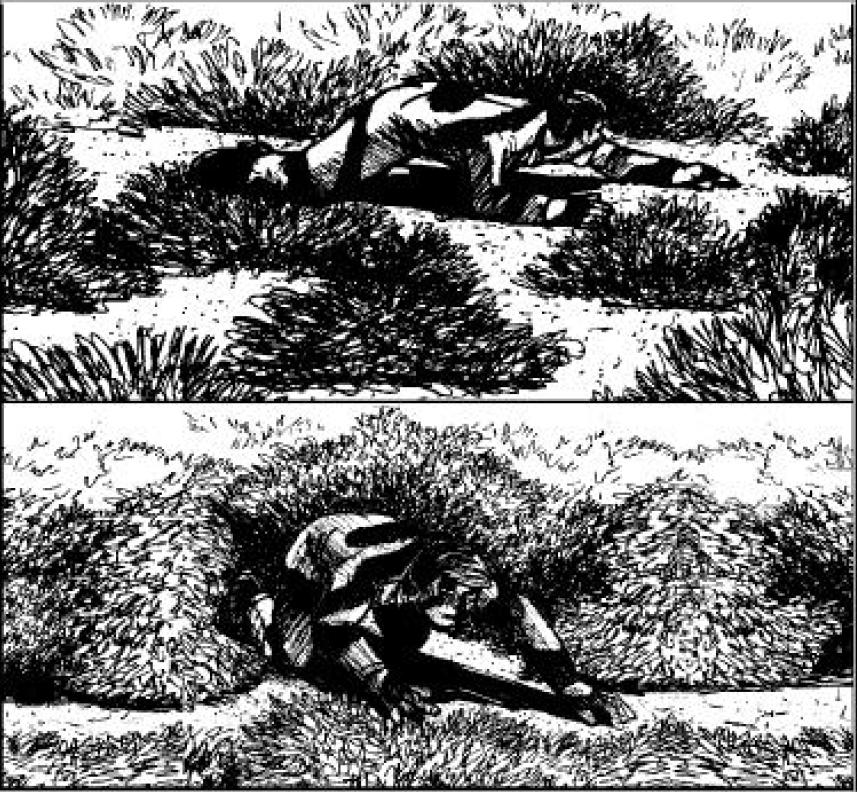
- <span style="font-size: 12pt; font-family: Rajdhani, sans-serif; background-color: transparent; font-weight: 400; font-style: normal; font-variant: normal; text-decoration: none; vertical-align: baseline; white-space: pre-wrap;">Camúflate con el entorno natural, incluso reptando.</span>
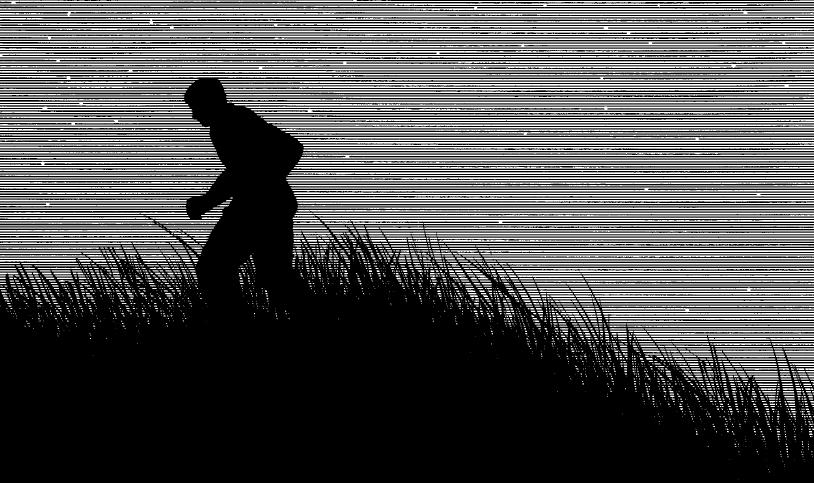
- <span style="font-size: 12pt; font-family: Rajdhani, sans-serif; background-color: transparent; font-weight: 400; font-style: normal; font-variant: normal; text-decoration: none; vertical-align: baseline; white-space: pre-wrap;">Evita hacer siluetas rompe la forma humana o las líneas reconocibles.</span>

<span style="font-size: 12pt; font-family: Rajdhani, sans-serif; background-color: transparent; font-weight: 400; font-style: normal; font-variant: normal; text-decoration: none; vertical-align: baseline; white-space: pre-wrap;"><span style="border: none; display: inline-block; overflow: hidden; width: 349px; height: 207px;">[![ios1-3.jpg](https://wiki.squadalpha.es/uploads/images/gallery/2024-10/scaled-1680-/ios1-3.jpg)](https://wiki.squadalpha.es/uploads/images/gallery/2024-10/ios1-3.jpg)</span></span>

- <span style="font-size: 12pt; font-family: Rajdhani, sans-serif; background-color: transparent; font-weight: 400; font-style: normal; font-variant: normal; text-decoration: none; vertical-align: baseline; white-space: pre-wrap;">En intervalos irregulares</span>
    - <span style="font-size: 12pt; font-family: Rajdhani, sans-serif; background-color: transparent; font-weight: bold; font-style: normal; font-variant: normal; text-decoration: none; vertical-align: baseline; white-space: pre-wrap;">PARA</span><span style="font-size: 12pt; font-family: Rajdhani, sans-serif; background-color: transparent; font-weight: 400; font-style: normal; font-variant: normal; text-decoration: none; vertical-align: baseline; white-space: pre-wrap;"> en un punto de ocultación.</span>
    - <span style="font-size: 12pt; font-family: Rajdhani, sans-serif; background-color: transparent; font-weight: bold; font-style: normal; font-variant: normal; text-decoration: none; vertical-align: baseline; white-space: pre-wrap;">MIRA</span><span style="font-size: 12pt; font-family: Rajdhani, sans-serif; background-color: transparent; font-weight: 400; font-style: normal; font-variant: normal; text-decoration: none; vertical-align: baseline; white-space: pre-wrap;"> si hay signos de actividad humana o animal (humo, pistas, caminos, tropas, vehículos, aviones, cables, edificios, etc.). </span>
    - <span style="font-size: 12pt; font-family: Rajdhani, sans-serif; background-color: transparent; font-weight: bold; font-style: normal; font-variant: normal; text-decoration: none; vertical-align: baseline; white-space: pre-wrap;">ESCUCHA</span><span style="font-size: 12pt; font-family: Rajdhani, sans-serif; background-color: transparent; font-weight: 400; font-style: normal; font-variant: normal; text-decoration: none; vertical-align: baseline; white-space: pre-wrap;"> vehículos, tropas, aviones, armas, animales, etc.</span>

<span style="font-size: 12pt; font-family: Rajdhani, sans-serif; background-color: transparent; font-weight: 400; font-style: normal; font-variant: normal; text-decoration: none; vertical-align: baseline; white-space: pre-wrap;">La selección de ruta requiere una planificación detallada y técnicas especiales (ruta irregular / zigzag) para camuflar la evidencia de viaje.</span>

<span style="font-size: 12pt; font-family: Rajdhani, sans-serif; background-color: transparent; font-weight: 400; font-style: normal; font-variant: normal; text-decoration: none; vertical-align: baseline; white-space: pre-wrap;">Algunas de esas técnicas son:</span>

- <span style="font-size: 12pt; font-family: Rajdhani, sans-serif; background-color: transparent; font-weight: 400; font-style: normal; font-variant: normal; text-decoration: none; vertical-align: baseline; white-space: pre-wrap;">Andar por las sombras de la vegetación, troncos derribados y ventisqueros.</span>
- <span style="font-size: 12pt; font-family: Rajdhani, sans-serif; background-color: transparent; font-weight: 400; font-style: normal; font-variant: normal; text-decoration: none; vertical-align: baseline; white-space: pre-wrap;">Penetra los obstáculos de la siguiente manera:</span>

<span style="font-size: 12pt; font-family: Rajdhani, sans-serif; background-color: transparent; font-weight: 400; font-style: normal; font-variant: normal; text-decoration: none; vertical-align: baseline; white-space: pre-wrap;"><span style="border: none; display: inline-block; overflow: hidden; width: 305px; height: 151px;">[![ios1-6.jpg](https://wiki.squadalpha.es/uploads/images/gallery/2024-10/scaled-1680-/ios1-6.jpg) ](https://wiki.squadalpha.es/uploads/images/gallery/2024-10/ios1-6.jpg)</span></span>

- - <span style="font-size: 12pt; font-family: Rajdhani, sans-serif; background-color: transparent; font-weight: 400; font-style: normal; font-variant: normal; text-decoration: none; vertical-align: baseline; white-space: pre-wrap;">Introdúcete en las zanjas profundas con los pies primero, para evitar lesiones. (acción parkour)</span>
    - <span style="font-size: 12pt; font-family: Rajdhani, sans-serif; background-color: transparent; font-weight: 400; font-style: normal; font-variant: normal; text-decoration: none; vertical-align: baseline; white-space: pre-wrap;">Salta vallas de troncos, pasando por debajo. Si no es posible, ve por encima, presentando una silueta tan baja como sea posible.</span>
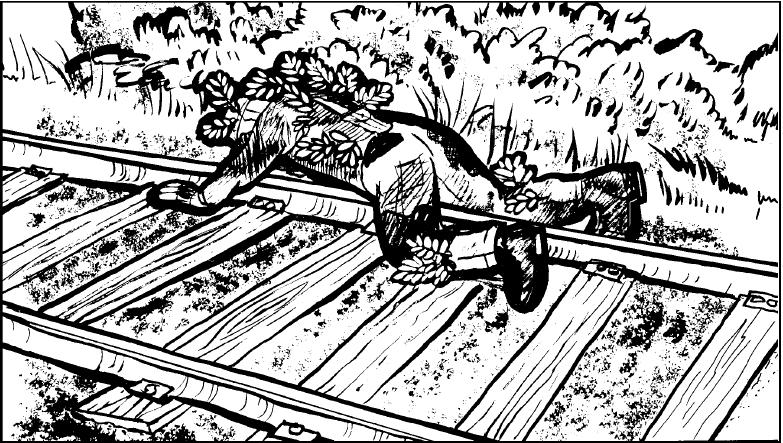
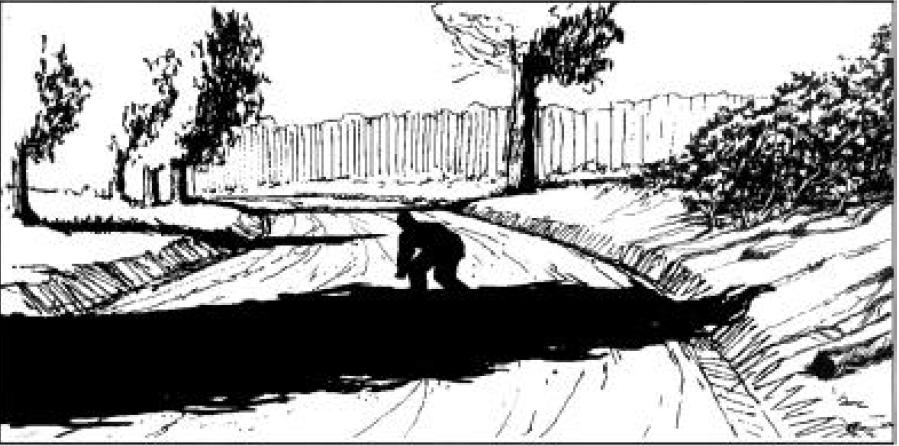
    - <span style="font-size: 12pt; font-family: Rajdhani, sans-serif; background-color: transparent; font-weight: 400; font-style: normal; font-variant: normal; text-decoration: none; vertical-align: baseline; white-space: pre-wrap;">Cruza caminos después de la observación desde la ocultación hasta determinar la actividad del enemigo.</span>
    - <span style="font-size: 12pt; font-family: Rajdhani, sans-serif; background-color: transparent; font-weight: 400; font-style: normal; font-variant: normal; text-decoration: none; vertical-align: baseline; white-space: pre-wrap;">Cruza en puntos que ofrecen ocultamiento como arbustos, sombras, curvas del camino, etc.</span>

<span style="font-size: 12pt; font-family: Rajdhani, sans-serif; background-color: transparent; font-weight: 400; font-style: normal; font-variant: normal; text-decoration: none; vertical-align: baseline; white-space: pre-wrap;">[![ios1-5.jpg](https://wiki.squadalpha.es/uploads/images/gallery/2024-10/scaled-1680-/ios1-5.jpg)](https://wiki.squadalpha.es/uploads/images/gallery/2024-10/ios1-5.jpg)</span>